Techsstack

Category: Uncategorized

  • Transforming Business with Scalable Blockchain Development:

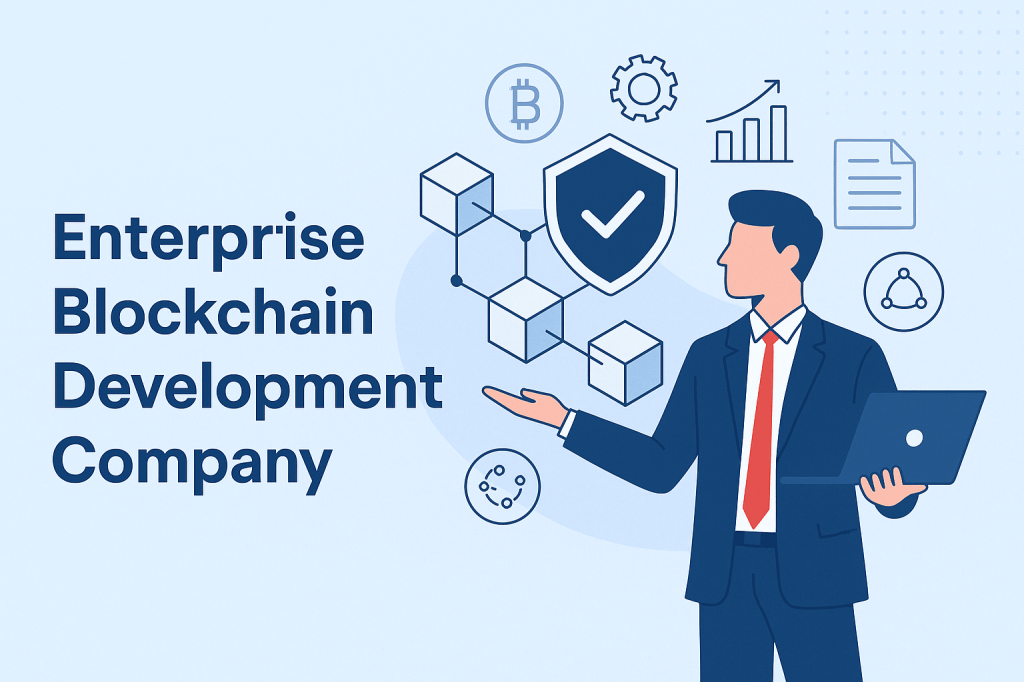
    Enterprise Blockchain Development

    In today’s increasingly digital-first world, enterprises are no longer treating blockchain as a futuristic concept — it has become a crucial infrastructure layer for driving transparency, security, and operational efficiency. Organizations across finance, supply chain, healthcare, and other industries are seeking robust, scalable blockchain-based ecosystems to meet evolving demands.

    This surge in demand has given rise to the need for expert partners — Enterprise Blockchain Development Companies — who can deliver end-to-end solutions that go beyond basic crypto implementations to solve real-world business challenges.

    Let’s dive deep into the landscape of Enterprise Blockchain Development, its importance, service offerings, benefits, and how to choose the right technology partner.


    What is Enterprise Blockchain Development?

    Enterprise Blockchain Development refers to the process of designing, building, and maintaining private, consortium, or hybrid blockchain networks tailored to the specific needs of businesses. Unlike public blockchains such as Bitcoin or Ethereum, enterprise blockchain networks are permissioned — meaning only authorized participants can access and interact with them.

    These systems are built with key enterprise requirements in mind:

    • Scalability
    • Security
    • Data privacy
    • Regulatory compliance
    • Interoperability with existing systems

    Organizations turn to Enterprise Blockchain Solutions when they need to digitize workflows, automate transactions, ensure data integrity, or create tamper-proof records — without sacrificing speed or control.


    Why Are Enterprises Embracing Blockchain?

    Businesses are realizing that traditional IT infrastructures often fall short when it comes to multi-party transactions, real-time data synchronization, and secure audit trails. Blockchain technology solves these pain points by providing:

    Business ChallengeHow Blockchain Helps
    Lack of transparencyImmutable shared ledger
    High operational costsSmart contracts automating manual tasks
    Data breaches and fraud risksCryptographic security
    Supply chain inefficienciesEnd-to-end product traceability
    Slow transaction settlementsNear real-time consensus mechanisms

    With Enterprise Blockchain Services, companies can innovate faster, build trust with stakeholders, and gain competitive advantages in crowded markets.


    Core Enterprise Blockchain Development Services

    A professional Enterprise Blockchain App Development Company offers a comprehensive set of services tailored for complex enterprise requirements:

    1. Blockchain Consulting
      Evaluate the potential and feasibility of blockchain adoption within the business model.
    2. Custom Blockchain Development
      Create tailored private or consortium blockchains with unique governance, consensus mechanisms, and smart contract rules.
    3. Enterprise App Integration
      Seamlessly integrate blockchain solutions with existing ERP, CRM, or supply chain management platforms.
    4. Smart Contract Development
      Build self-executing agreements coded with complex business logic, automating processes with minimal manual intervention.
    5. Blockchain Testing & QA
      Perform rigorous testing for performance, security vulnerabilities, and interoperability before deployment.
    6. Maintenance & Upgrades
      Ensure that blockchain systems remain up-to-date with changing technology standards and business needs.

    When you partner with an experienced firm offering Enterprise Blockchain Development Services, it enables smoother project delivery, greater risk management, and optimized operational performance.


    Key Benefits of Enterprise Blockchain Solutions

    Blockchain is not just a technological upgrade — it’s a business transformation catalyst. Some of the most impactful benefits include:

    • Improved Transparency: All network participants see the same data, reducing disputes and fraud.
    • Enhanced Security: Distributed ledger technology protects against cyberattacks and unauthorized tampering.
    • Operational Efficiency: Automated workflows with smart contracts lower administrative burdens.
    • Cost Reduction: Eliminating intermediaries and streamlining operations save significant costs.
    • Regulatory Compliance: Blockchain’s auditable and traceable records support better adherence to industry regulations.

    A growing number of enterprises across sectors are already witnessing double-digit percentage improvements in cost savings and operational efficiencies thanks to Enterprise Blockchain Services.


    Real-World Use Cases of Enterprise Blockchain

    The implementation of enterprise blockchain goes far beyond financial services. Here are some real-world examples:

    • Supply Chain Management
      Brands like Walmart and Nestlé use blockchain for real-time tracking of product provenance.
    • Healthcare
      Blockchain ensures patient data security, sharing consent, and pharmaceutical supply chain integrity.
    • Banking & Finance
      Institutions like JPMorgan and HSBC use blockchain to accelerate cross-border payments and settlements.
    • Insurance
      Companies such as AXA leverage smart contracts for automating claims processing and fraud detection.

    These examples show how an Enterprise Blockchain Development Company can drive value creation across industries.


    Choosing the Right Enterprise Blockchain Partner

    Choosing the right technology partner is pivotal to success. Here’s what enterprises should look for:

    • Experience Across Industries: Ensure the partner has hands-on experience with your sector’s nuances.
    • Technical Expertise: Blockchain protocol selection (Hyperledger, Corda, Quorum, Ethereum, etc.) should align with project goals.
    • Security Standards: Security-first development approach is crucial for enterprise-grade applications.
    • Customization Capability: Every enterprise use case is unique; off-the-shelf solutions rarely deliver optimal results.
    • Long-Term Support: Blockchain implementation is a journey reliable maintenance, upgrades, and scaling support are essential.

    For businesses looking for a dependable partner, SoluLab offers comprehensive Enterprise Blockchain Development Services designed to meet diverse business requirements.


    Final Thoughts

    Blockchain is rapidly shifting from “experimental” to “essential” for enterprises across industries. Forward-thinking companies investing today in Enterprise Blockchain Solutions are future-proofing their operations against a rapidly evolving digital economy.

    Whether you’re looking to optimize your supply chain, safeguard sensitive data, or reimagine customer transactions, choosing the right Enterprise Blockchain Development Company makes all the difference.

    To learn more about how a trusted technology partner like SoluLab can bring your blockchain vision to life, visit SoluLab.
  • How Generative AI is Revolutionizing Industries: Real-World Applications and Opportunities

    Generative AI is Revolutionizing Industries:

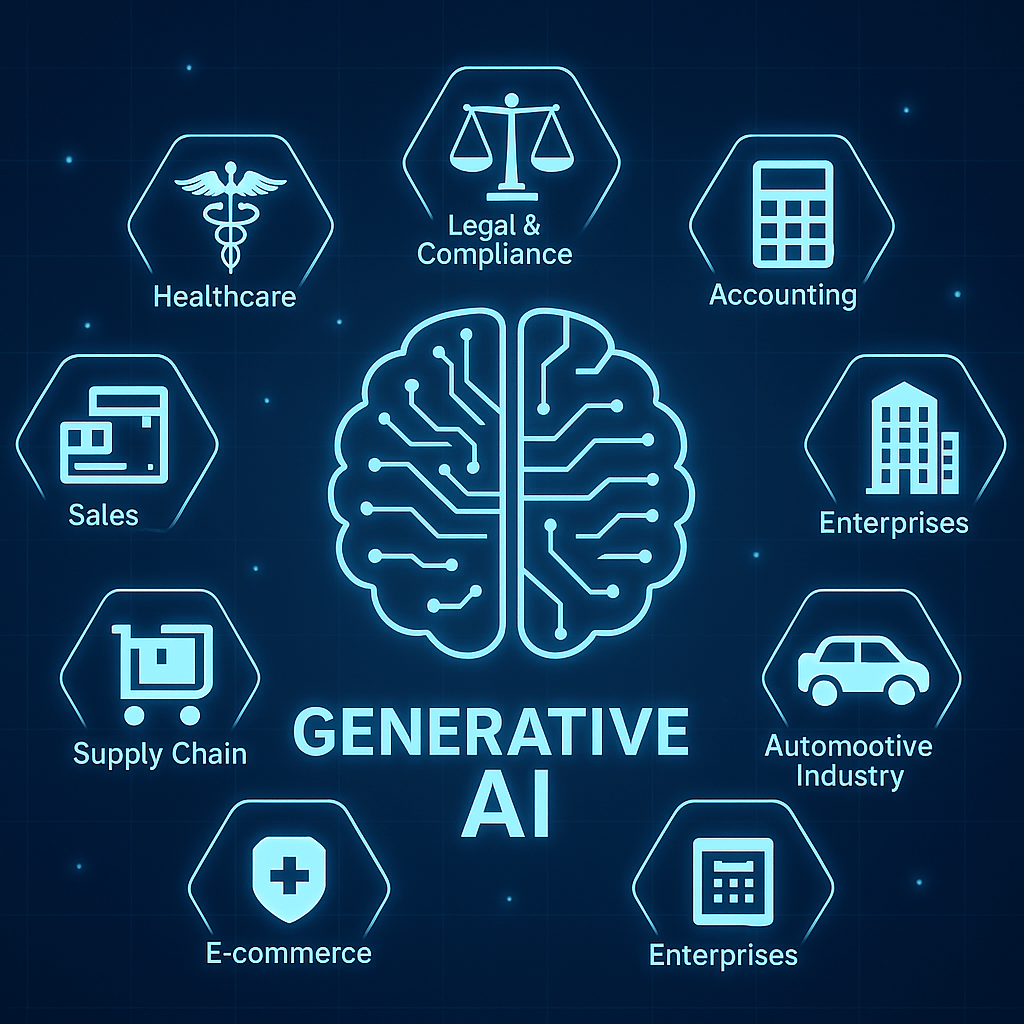
    Generative AI has moved beyond theoretical use cases to become a transformative force across industries. From healthcare to automotive, enterprises are leveraging generative AI consulting services to boost efficiency, enhance decision-making, and unlock new business models. In this article, we explore the diverse applications of Generative AI across sectors, showcasing its evolving role as a critical enabler of innovation.


    Generative AI for Healthcare

    The healthcare industry is embracing generative AI to drive patient-centered innovation. Technologies like personalized treatment modeling, drug discovery acceleration, and automated diagnostics are reshaping how care is delivered.

    Key applications include:

    • Drug Discovery: Generative models predict molecule structures, significantly reducing R&D timelines.
    • Personalized Treatment Plans: AI analyzes patient data to recommend therapies tailored to genetic profiles.
    • Medical Imaging: AI enhances CT, MRI, and X-ray image quality, helping radiologists detect anomalies faster.

    Explore more about Generative AI in Healthcare

    Generative AI for Legal and Compliance

    In the legal sector, generative AI improves accuracy, saves time, and ensures regulatory compliance. Law firms and compliance departments now rely on AI for document analysis, contract generation, and risk assessment.

    Impact areas:

    • Contract Automation: Drafting legal documents faster with fewer human errors.
    • Compliance Monitoring: Tracking policy changes and ensuring company processes stay aligned.
    • Legal Research: Summarizing complex legal texts, saving hours of manual effort.

    Discover the full potential of Generative AI for Legal and Compliance.

    Generative AI in Accounting

    Accounting firms are experiencing a paradigm shift with the adoption of generative AI. Traditional manual bookkeeping tasks are evolving into intelligent, automated workflows.

    Applications include:

    • Automated Financial Reporting: AI generates real-time financial summaries.
    • Error Detection: Advanced models identify anomalies in large datasets.
    • Predictive Analysis: Offering CFOs future projections with higher accuracy.

    Learn more about Generative AI in Accounting.

    Generative AI in Sales

    Sales teams are leveraging AI to hyper-personalize outreach, forecast revenue, and improve lead conversions. Gen AI consulting services are now central to creating intelligent sales ecosystems.

    Strategic use cases:

    • Content Personalization: Crafting custom emails, proposals, and marketing assets.
    • Sales Forecasting: Predicting pipeline health with better precision.
    • Chatbots and Virtual Assistants: Automating initial customer interactions.

    Uncover how Generative AI is transforming Sales.

    Generative AI in Payments

    The financial payments industry faces constant pressure to innovate while maintaining security. Generative AI is fueling advancements in fraud detection, personalization, and transaction processing.

    Examples:

    • Fraud Detection: Real-time identification of suspicious transactions.
    • Personalized Recommendations: Tailored payment plans based on customer behavior.
    • Risk Management: Predicting and mitigating payment processing risks.

    Get deeper insights into Generative AI in Payments.

    Generative AI for Enterprises

    Across industries, enterprises are adopting AI not just for operational efficiency but also to fuel strategic decision-making and customer-centric innovation.

    Enterprise-wide applications:

    • AI-Driven Knowledge Management: Centralizing and contextualizing organizational knowledge.
    • Workforce Automation: Enhancing employee productivity through AI assistants.
    • Strategic Planning: Simulating scenarios and business models before market execution.

    Find out how Generative AI empowers Enterprises.

    Generative AI in Automotive Industry

    Automotive companies are integrating AI into their R&D, manufacturing, and customer experience strategies. Generative AI consultants help accelerate innovation cycles in this highly competitive market.

    Industry-specific applications:

    • Autonomous Vehicle Design: Creating safer vehicle navigation systems.
    • Predictive Maintenance: Anticipating component failures before they occur.
    • Customer Personalization: Designing custom vehicle features based on user preferences.

    Discover more about Generative AI in the Automotive Industry.

    Generative AI in Supply Chain

    Supply chains are increasingly complex, and AI offers solutions to predict, manage, and optimize logistics.

    Key transformations:

    • Demand Forecasting: Improving inventory management accuracy.
    • Logistics Optimization: Streamlining routes and warehouse operations.
    • Risk Mitigation: Identifying vulnerabilities and suggesting contingency plans.

    Explore the full story on Generative AI in Supply Chain Management.

    Generative AI in E-commerce

    E-commerce platforms are turning to generative AI to offer personalized shopping experiences, better customer support, and smarter inventory management.

    Highlights include:

    • Personalized Product Recommendations: AI tailors suggestions in real-time.
    • Content Generation: Automating product descriptions and marketing copy.
    • Chatbots: Offering instant and consistent customer support.

    Learn how Generative AI is reshaping E-commerce.

    Generative AI for Insurance

    Insurance companies are using generative AI to underwrite policies more accurately, improve claims processing, and create hyper-personalized policies.

    Applications:

    • Claims Processing: AI verifies and expedites claims faster than traditional methods.
    • Risk Assessment: Predictive modeling identifies high-risk customers.
    • Custom Policy Creation: Tailoring insurance products to niche market needs.

    Discover more on Generative AI in Insurance.


    Why Enterprises are Seeking Expert Generative AI Consulting

    Businesses across verticals are increasingly partnering with a trusted generative AI consulting company to customize their AI strategies. Tailored custom generative AI services ensure a faster go-to-market and competitive edge. Companies offering gen AI consulting services empower enterprises to bridge the gap between traditional business models and next-generation AI-driven approaches.

    For expert support and solutions, SoluLab stands out among top generative ai consulting companies, delivering business-specific innovation with measurable ROI.

    Explore our Generative AI Consulting Company services.


    Conclusion: Shaping the Future with Generative AI

    Generative AI is not just about automation; it’s about augmenting human capabilities, creating value, and reimagining business possibilities. From healthcare diagnostics to dynamic supply chains, from personalized shopping experiences to predictive legal compliance, industries are undergoing a profound transformation.

    To fully leverage these opportunities, partnering with experienced generative ai consultants who understand industry-specific challenges is crucial. SoluLab’s expertise in providing bespoke solutions ensures that businesses are not only ready for today but are prepared to lead tomorrow.

    Ready to drive transformation with Generative AI? Connect with SoluLab today.

  • The Expanding Role of AI Across Industries: A 2025 Perspective

    Artificial Intelligence (AI) is no longer a futuristic concept—it’s a foundational driver of innovation across sectors. From reshaping financial modeling in banks to enhancing patient diagnostics in healthcare, AI is enabling organizations to unlock unprecedented value, agility, and intelligence. The transformative impact of AI is evident in how businesses streamline processes, improve personalization, and make data-driven decisions faster than ever.

    This article explores how AI is being applied across different industries, based on recent real-world trends and practical implementations.

    AI in Finance

    AI has become the backbone of modern finance, helping firms manage risk, predict trends, and provide better client experiences. Intelligent systems are now used for fraud detection, algorithmic trading, credit risk scoring, and regulatory compliance.

    Predictive analytics and real-time data processing enable financial institutions to:

    • Detect anomalies across millions of transactions instantly
    • Automate portfolio management based on market sentiment
    • Perform dynamic credit assessments

    These capabilities have redefined how financial firms operate, making operations more secure and efficient. According to SoluLab’s insights on AI in Finance, leading institutions are increasingly investing in customized AI models tailored to their asset classes and trading algorithms.

    AI in Banking

    In the banking industry, AI enhances customer experience through personalized banking, chatbots, voice assistants, and AI-powered loan assessments. It also plays a pivotal role in anti-money laundering (AML) systems, where AI scans large datasets to flag suspicious activity.

    AI applications include:

    • Virtual banking assistants improving service response time
    • NLP-based chatbots resolving 80% of queries without human input
    • Document recognition software streamlining KYC and onboarding

    As highlighted in SoluLab’s coverage on AI in Banking, banks leveraging AI report reduced operational costs and enhanced customer retention through personalization.

    AI in Education

    AI is fundamentally reshaping how students learn and educators teach. Adaptive learning platforms, automated grading, and AI tutors help personalize the educational journey for every student.

    Key advancements in AI education tools include:

    • AI tutors providing real-time feedback to learners
    • Personalized content delivery based on individual performance
    • Predictive systems to identify at-risk students

    SoluLab’s take on AI in Education emphasizes how educational institutions are adopting AI to enhance learning outcomes while reducing administrative burden.

    AI in Healthcare

    AI’s impact on healthcare is profound—ranging from diagnostic imaging to precision medicine. Machine learning algorithms help physicians detect anomalies in radiology scans, while AI-driven platforms analyze genetic data to suggest personalized treatments.

    Real-world applications include:

    • AI-assisted surgeries with real-time visualization
    • Virtual health assistants handling patient triage
    • Predictive models anticipating chronic disease outbreaks

    In SoluLab’s AI in Healthcare article, it’s clear that AI is pivotal in enhancing accuracy, speed, and scalability in patient care delivery.

    AI in Travel and Tourism

    AI in travel focuses on personalized experiences, predictive pricing, and efficient operations. From booking to post-trip follow-up, AI ensures customer journeys are smooth and customized.

    Examples of AI in travel:

    • Intelligent recommendation engines based on past preferences
    • Real-time language translation and chatbot support
    • AI-driven route optimization for logistics

    As described by SoluLab, travel companies using AI report higher booking conversions and improved loyalty.

    AI in Manufacturing

    AI is ushering in the era of Industry 4.0. Manufacturers are deploying smart systems to monitor supply chains, forecast machine failure, and optimize production schedules.

    Impactful AI use cases include:

    • Predictive maintenance to reduce unplanned downtimes
    • Visual inspection systems for quality assurance
    • AI-enabled robotics on the factory floor

    According to SoluLab’s analysis on AI in Manufacturing, AI accelerates agility and productivity, which is vital in global manufacturing competitiveness.

    AI in BFSI (Banking, Financial Services & Insurance)

    AI is deeply embedded in BFSI operations, transforming customer onboarding, claims management, and financial advising. Intelligent agents can analyze behavioral data to predict product needs or spot fraud in real time.

    Popular applications include:

    • Robo-advisors offering personalized investment strategies
    • Insurance claim automation using AI document parsing
    • Regulatory compliance systems using NLP and machine learning

    Explore the full scope of AI’s financial reach in SoluLab’s AI in BFSI guide.

    AI in Media and Entertainment

    AI is powering creativity, automation, and audience engagement in the media landscape. From content recommendation to real-time CGI generation, AI tools enable both scale and precision.

    Transformative capabilities include:

    • Personalized content curation on OTT platforms
    • AI-generated music and video editing
    • Sentiment analysis for audience feedback

    As mentioned in SoluLab’s article on AI in Entertainment, these tools reduce production time and boost viewer retention.

    AI in Sports

    AI applications in sports analytics have revolutionized performance tracking, injury prevention, and fan engagement. Teams are using AI to gain competitive advantages through data.

    Key areas include:

    • AI cameras for player movement analysis
    • Real-time game strategy adjustment algorithms
    • Chatbots and AI content for enhanced fan interaction

    SoluLab’s AI in Sports overview demonstrates how AI is transforming both gameplay and sports business models.

    Choosing the Right AI Partner

    With such widespread use cases, businesses must choose a reliable AI development company that understands domain-specific challenges. A custom AI development company can design solutions aligned with unique business goals—whether you’re in fintech, edtech, or healthcare.

    When looking for AI development services in USA, it’s essential to prioritize partners that ensure data security, model accuracy, and scalability. SoluLab, a reputed Artificial intelligence development company, offers end-to-end AI development solutions for organizations aiming to stay ahead.

    Whether you’re seeking model customization, NLP integration, or full-stack deployment, partnering with a top-tier AI development agency can help realize your AI vision with precision.

    Conclusion

    AI is now a mission-critical capability, not just an innovation trend. It touches nearly every sector and function—from real-time fraud prevention to personalized learning and automated storytelling. By aligning your AI strategy with domain expertise and executional excellence, your business can leap ahead in both efficiency and customer value.

    SoluLab, among the top AI development companies, stands out with deep technical expertise and industry-specific AI implementations. If you’re exploring AI transformation, SoluLab offers customized solutions to help you lead the change.

  • How Blockchain Interoperability Is Shaping Enterprise Adoption in 2025

    As enterprise adoption of blockchain accelerates, a new challenge is emerging—how can isolated blockchains interact meaningfully across diverse business ecosystems? The answer lies in blockchain interoperability, which enables independent blockchain systems to communicate, exchange data, and perform cross-chain operations without centralized intermediaries. This growing demand is reshaping how enterprises view digital infrastructure.

    What is Blockchain Interoperability?

    Blockchain interoperability refers to the ability of different blockchain systems to seamlessly communicate, share data, and interact without compatibility issues. Each blockchain operates with distinct consensus mechanisms, data structures, and governance models. Interoperability acts as a bridge, ensuring these differences don’t become operational roadblocks.

    By 2025, the blockchain interoperability market is projected to surge from USD 0.83 billion to USD 7.90 billion by 2034, reflecting the critical role this capability plays in enterprise transformation. It supports use cases ranging from cross-chain finance and global logistics to multinational healthcare systems, driving business efficiency and innovation.

    Why Interoperability Matters to Enterprises

    For businesses, interoperability is not merely a technical upgrade but a strategic necessity. Modern organizations deploy multiple blockchain systems across departments and partners. The absence of connectivity limits value realization. Here’s how interoperability supports enterprise goals:

    • Seamless Data Exchange: Enables real-time data flows across supply chain, finance, and operations platforms.
    • Operational Efficiency: Reduces reconciliation overheads and eliminates reliance on third-party intermediaries.
    • Scalable Growth: Facilitates integration of emerging blockchain platforms without disrupting existing systems.
    • Future-Proofing: Interoperability ensures business continuity across evolving blockchain standards.
    • Enhanced UX: Powers smoother cross-platform user experiences, from payments to credential sharing.

    These benefits strengthen enterprise resilience and open new models of value delivery.

    How Blockchain Interoperability Works

    Enabling interoperability requires solutions that bridge isolated ledgers while preserving security, speed, and trust. Here are key components:

    1. Relays and Bridges: Trustless verification systems that allow one chain to confirm data or state from another.
    2. Atomic Swaps: Peer-to-peer asset exchanges across different blockchains without intermediaries.
    3. Middleware Protocols: Platforms like Polkadot, Cosmos, and Hyperledger Fabric provide abstraction layers that unify multiple chains.
    4. Inter-Blockchain Communication (IBC): A standardized framework that allows message passing between independent networks.
    5. Oracles and APIs: External tools like Chainlink supply real-world data or enable integration with off-chain applications.

    These components ensure robust data and asset flow in decentralized environments.

    Common Approaches to Achieve Interoperability

    The architecture of interoperability can vary by use case. Leading approaches include:

    • Cross-Authentication: Trusted networks or validators confirm transactions across chains. This method balances decentralization with auditability.
    • Oracle Networks: Act as external data bridges. They are vital for smart contracts that rely on off-chain events or inputs.
    • API Gateways: Allow enterprise software to interact with multiple blockchain networks using standardized protocols.
    • Cross-Chain Frameworks: Enable smart contract logic, asset transfers, and metadata sharing across platforms with unified SDKs.

    Solutions like Cosmos SDK and Polkadot Substrate make it easier for developers to build interoperable dApps while maintaining scalability and performance.

    Enterprise-Grade Interoperability

    Unlike public blockchains, enterprise networks demand permissioned access, compliance, and robust data privacy. Interoperability must account for:

    • Integration with legacy IT systems
    • Regulatory compliance (e.g., HIPAA, GDPR)
    • Role-based access controls
    • Data localization requirements

    Enterprise interoperability ensures businesses don’t need to rebuild infrastructure from scratch. Instead, they can leverage existing blockchain investments to securely share data and collaborate across industries.

    The Future of Blockchain Interoperability

    As blockchain ecosystems mature, enterprises will increasingly adopt multi-chain strategies. Interoperability will power this shift, making it possible to:

    • Unify fragmented ecosystems
    • Automate complex supply chains
    • Enable real-time payments and settlements
    • Create decentralized identity solutions across borders

    By embracing open standards and secure communication protocols, interoperability will become the foundation of cross-platform innovation.

    To explore enterprise-ready blockchain interoperability solutions, visit SoluLab’s guide.

    Final Thoughts

    Blockchain interoperability is redefining the digital landscape for enterprises. As organizations seek better efficiency, transparency, and scalability, the ability to integrate blockchain systems becomes a competitive advantage.

    SoluLab, a leading Blockchain Development Company, offers end-to-end Blockchain Development Services tailored to meet enterprise demands. With robust expertise in cross-chain development, we help businesses build connected solutions that are scalable, secure, and future-ready.

    Now is the time to explore how blockchain interoperability can elevate your enterprise capabilities. Let SoluLab guide you through the next phase of digital transformation.

  • AI Agents for Recruiting: A Guide for Hiring Teams

    As talent acquisition becomes increasingly competitive, hiring teams are turning to AI agents to enhance the recruitment process. From streamlining candidate sourcing to improving interview coordination, AI agents are reshaping how companies attract and evaluate talent. This guide explores how AI agent development solutions can revolutionize recruitment workflows and why HR departments are partnering with AI agent development companies to gain a strategic edge.

    What Are AI Agents in Recruiting?

    AI agents are autonomous software systems designed to perform specific tasks using artificial intelligence. In the recruitment domain, AI agents can automate and optimize functions such as resume screening, candidate matching, interview scheduling, and even onboarding processes.

    Unlike traditional software, AI agents continuously learn from data inputs, improving their performance over time. They combine natural language processing (NLP), machine learning (ML), and predictive analytics to make data-driven decisions in real-time.

    Key Benefits of AI Agent Solutions in Recruitment

    1. Enhanced Efficiency:

    • AI agents process thousands of resumes in minutes, filtering out unqualified candidates and shortlisting top matches.
    • Automated scheduling tools reduce manual coordination, freeing up recruiters’ time for strategic tasks.

    2. Improved Candidate Experience:

    • Conversational AI agents interact with candidates in real time, answering FAQs, updating on application status, and gathering additional details.
    • Personalized engagement improves employer branding and boosts candidate satisfaction.

    3. Reduced Bias:

    • By relying on data-driven assessments, AI agents help reduce unconscious bias in screening and evaluation.

    4. Data-Driven Insights:

    • AI-powered analytics offer insights into recruitment KPIs, such as time-to-hire, sourcing channel efficiency, and candidate drop-off rates.

    Use Cases of AI Agents in Recruitment

    FunctionAI Agent Use Case
    Resume ScreeningNLP algorithms rank candidates based on skill match
    Interview SchedulingAI bots integrate with calendars to book slots automatically
    Candidate EngagementVirtual recruiters interact with applicants through chat or voice
    Onboarding SupportAI agents guide new hires through forms and compliance steps

    Why Choose a Top AI Agent Development Company?

    To fully leverage the potential of AI in recruitment, it is essential to collaborate with a top AI agent development company. These companies specialize in creating customized AI agent development services that align with your business goals, existing tech stack, and recruitment strategy.

    SoluLab is a trusted provider of AI agent development solutions, offering end-to-end services from consultation to deployment. As a leading AI agent development company, SoluLab helps businesses build intelligent recruiting systems that are secure, scalable, and efficient.

    AI Agent Development Services: What to Expect

    When you work with a professional firm offering AI agent development services, you can expect:

    • Customized Development: Solutions tailored to specific recruitment workflows
    • Integration Capability: Seamless integration with ATS, HRMS, and other recruitment tools
    • Security and Compliance: Adherence to GDPR, EEOC, and other regulatory standards
    • Post-Deployment Support: Continuous training, updates, and performance monitoring

    To learn more, explore SoluLab’s comprehensive AI Agent Development Solutions.

    Future of AI Agents in Talent Acquisition

    The future of recruitment lies in intelligent automation. As more businesses embrace digital transformation, AI agents will play a pivotal role in enhancing recruiter productivity, improving decision accuracy, and delivering personalized candidate experiences at scale.

    Adopting AI agents isn’t just a trend—it’s a strategic necessity for organizations looking to attract top talent efficiently. By partnering with a top AI agent development company, HR teams can stay ahead of the curve and redefine the way they hire.

    Conclusion

    AI agents are no longer futuristic tools; they are practical, results-driven solutions that transform recruitment. Whether you’re a startup scaling fast or an enterprise optimizing complex hiring workflows, AI agent development solutions can be a game changer.

    Explore how SoluLab can help you harness the power of AI in recruitment and build intelligent, human-centric hiring systems that deliver measurable results.

  • From Classrooms to Clinics: How AI is Quietly Reshaping Our Daily Lives

    Artificial Intelligence (AI), it’s becoming an integral part of our everyday experiences. From the way we manage our finances to how we learn, travel, and receive healthcare, AI is streamlining processes and enhancing personalization. At the forefront of this transformation is SoluLab, a trusted generative AI consulting company offering comprehensive AI development services.​

    Banking on Intelligence

    In the financial sector, AI is revolutionizing how banks interact with customers and manage operations. SoluLab’s implementation of generative AI in banking has led to the development of AI-driven chatbots and virtual assistants that provide 24/7 customer support, offering personalized financial advice and real-time responses to queries. This not only enhances customer satisfaction but also streamlines banking operations.

    Personalized Learning Experiences

    Education is becoming more tailored, thanks to AI. SoluLab’s AI solutions in education analyze individual learning styles and academic data to create personalized learning paths. This approach ensures that each student receives customized content, improving comprehension and retention. By adapting to each learner’s needs, AI is making education more effective and engaging.

    Healthcare

    In healthcare, AI is enhancing diagnostic accuracy and treatment planning. SoluLab utilizes advanced algorithms to analyze vast medical data, aiding in early disease detection and personalized treatment strategies. By processing complex datasets, AI supports healthcare professionals in making informed decisions, ultimately improving patient outcomes.

    Travel

    Travel planning is becoming more intuitive with AI. SoluLab’s AI applications in the travel industry offer personalized recommendations and efficient customer service through AI agents. By analyzing user preferences and behavior, AI provides tailored travel suggestions, enhancing the overall travel experience.

    Manufacturing

    Manufacturing processes are being optimized through AI. SoluLab’s AI solutions in manufacturing include predictive maintenance, quality control, and supply chain optimization. By analyzing data patterns, AI helps in reducing downtime, improving product quality, and forecasting demand, leading to more efficient manufacturing operations.

    Why SoluLab?

    As a leading AI development company, SoluLab offers comprehensive AI development solutions across various industries. Their expertise in generative AI consulting services ensures that businesses can leverage AI to enhance operations, personalize customer experiences, and make data-driven decisions.​

    Whether it’s transforming banking services, personalizing education, advancing healthcare, tailoring travel experiences, or optimizing manufacturing, SoluLab’s AI development services are at the core of these innovations.​

    Embracing AI is no longer optional—it’s essential for staying competitive in today’s fast-paced world. Partner with SoluLab to harness the power of AI and drive your business forward.

  • AI in Healthcare: From Reactive Systems to Proactive Patient-Centric Models

    The healthcare industry is witnessing a paradigm shift—from reactive problem-solving to proactive patient management—all thanks to Artificial Intelligence. With AI-driven tools now analyzing genetic profiles, vital signs, and even mental health patterns, the future of healthcare is becoming more predictive, preventive, and personalized.

    Smart Tools for Smart Decisions
    Virtual health assistants are reshaping patient interactions by offering real-time medical advice, reminders, and symptom tracking. NLP-based AI models extract actionable data from electronic health records (EHRs), reducing documentation time and improving clinical decision-making.

    Transformative Use Cases
    In remote patient monitoring, AI helps detect anomalies in patient vitals and prompts early interventions. In mental health, AI assesses behavioral patterns and emotional indicators, aiding in early diagnosis and customized care strategies.

    The Road Ahead
    Emerging technologies like AI-enabled wearables, quantum computing, and robotic surgery will further transform healthcare delivery. However, the success of this transition relies heavily on securing patient data, standardizing ethical norms, and maintaining human oversight.

    SoluLab, your dedicated Artificial intelligence development company, enables healthcare providers to integrate scalable AI infrastructure tailored to their unique needs. With our full suite of AI Development solutions, including NLP, computer vision, and ML consulting, we help healthcare teams unlock new efficiencies and outcomes.

    See how we’re redefining healthcare or reach out today.

  • Drive Business Value with Generative AI: Consulting Beyond the Hype

    Generative AI is trending, but it’s more than hype it’s a game-changer for businesses that know how to harness it. That’s why more companies are turning to generative AI consulting services to explore its practical applications. From text and image generation to intelligent automation, the right consulting partner can unlock enormous value.

    A reliable generative AI consulting company acts as your compass in this evolving space. Instead of applying a one-size-fits-all model, they analyze your unique business structure, align AI implementation with your goals, and create a clear roadmap. This is essential for organizations aiming to reduce costs, increase productivity, and stay ahead of competition.

    SoluLab has emerged as a trusted name among generative AI consulting companies. Our deep technical expertise, combined with a human-first consulting approach, has helped clients build smarter workflows, faster customer support systems, and content engines that scale.

    Our expert generative ai consultants focus on tangible outcomes. Curious how it works in your sector? Visit SoluLab to explore case studies or connect with us for a free consultation. Let’s build smarter together.

  • The Business Case for Generative AI: Build Smarter, Create Faster, Scale Bigger

    In a time when innovation is currency, Generative AI has emerged as a critical pillar for businesses looking to stay ahead. From ChatGPT to Stable Diffusion, these technologies are no longer just emerging trends they’re reshaping entire industries.

    According to recent projections, the generative AI market is expected to reach $442.07 billion by 2031, driven by rapid adoption across sectors. Major investments—like Microsoft’s $1 billion stake in OpenAI urther confirm the long-term potential of this field, even amidst broader tech market fluctuations.

    Why Generative AI is a Business Essential

    Adopting generative AI is no longer optional. Here’s why more businesses are building with GenAI:

    • Efficiency: Automate time-consuming processes and free up creative teams.
    • Creativity: Generate designs, scripts, content, and more—faster than ever.
    • Productivity: Deliver outputs in minutes instead of weeks.
    • Savings: Reduce operational costs with AI-powered automation.
    • Data Insights: Uncover hidden trends from massive datasets.
    • Personalization: Build real-time, tailored user experiences at scale.

    Common Applications Across Departments

    Whether you’re in design, marketing, development, or operations generative AI has something for you:

    • Graphics & Visual Art: Turn concepts into polished visuals.
    • Photography: Restore and enhance images with stunning detail.
    • Audio: Produce lifelike narration and original music compositions.
    • Video: Edit and stylize footage at frame-level precision.
    • Text: Generate everything from email copy to knowledge base articles.

    📘 Want to go deeper? How to Create Your Own Generative AI Solution

    Building Your Own GenAI Stack: A Roadmap

    Step 1: Data Preparation
    Quality data is the foundation. Curate, clean, and structure your datasets before training.

    Step 2: Choose Tools & Frameworks
    From Python and PyTorch to OpenCV and AWS, select tools that align with your needs and scale.

    Step 3: Model Development
    Choose from architectures like GANs, VAEs, and LSTMs to suit your application text, image, or audio generation.

    Step 4: Optimize & Tune
    Fine-tune hyperparameters, apply regularization, and use tools like MLflow to monitor experiments.

    Step 5: Evaluate Performance
    Run quality checks, gather feedback, and iterate. Key metrics: relevance, fluency, latency, and coherence.

    Step 6: Deploy & Monitor
    Whether on-premise or in the cloud, use APIs and CI/CD pipelines to ensure stability and scale.

    Industry Case Studies

    • Finance: Fraud detection and AI-driven trading insights.
    • Healthcare: AI-based diagnostics and treatment recommendations.
    • Manufacturing: Design automation and predictive maintenance.
    • Retail: Dynamic ads, personalized product feeds.
    • Entertainment: Scriptwriting and background scoring.
    • Education: Adaptive learning modules and smart assessments.

    Partner with Experts to Unlock GenAI Value

    At SoluLab, we don’t just build AI we build success stories. As a specialized generative ai consulting company, our team helps brands craft bespoke generative AI products aligned with market goals and user intent.

    Our recent partnership with AmanBank led to the development of a GenAI-powered mobile banking assistant, designed to offer real-time support and personalized financial insights to over 750,000 customers.

    From vision to deployment, our generative ai consulting services are designed to help you move faster and smarter.

    Learn more about our generative ai consulting company

    Final Thoughts

    The next wave of digital transformation will be powered by generative AI. The technology is ready. The use cases are proven. Now it’s your move.

    Whether you’re starting from scratch or looking to scale, SoluLab’s experienced generative ai consultants and gen ai consulting services are ready to support your journey.

    Start building what’s next.

  • Diamond Tokenization in 2025: Investing in Real-World Assets Without Borders

    What if you could invest in a certified diamond—without ever touching it?

    It’s no secret that diamonds have long stood as emblems of wealth and permanence. But traditionally, they’ve also been some of the hardest assets to access: tough to value, harder to liquidate, and nearly impossible to fractionally own. That changes in 2025.

    In an era where gold tokenization is becoming standard, diamonds are stepping into the digital spotlight. Thanks to blockchain, investors around the world can now engage with this luxury asset like never before.

    According to market projections, the global diamond market is set to rise from $105.2 billion in 2024 to $110.1 billion in 2025, with further expansion reaching $140.1 billion by 2032. This includes $86.86 billion in natural diamonds and $53.24 billion in synthetic diamonds. These numbers highlight why real world asset tokenization services are rapidly gaining popularity.

    Understanding Diamond Asset Tokenization

    Diamond asset tokenization is the blockchain-based conversion of physical diamonds into tradable digital tokens. Each token is backed 1:1 by a certified diamond stored securely, making it possible to buy, sell, or hold a fraction of a diamond from your phone or desktop.

    This approach delivers three major benefits: enhanced accessibility, improved liquidity, and increased transparency.

    Top Features of Tokenized Diamonds

    • Blockchain Security: Ownership is recorded immutably on-chain, reducing fraud risk and ensuring provenance.
    • Fractional Ownership: Investors can own part of a diamond through tokens, breaking traditional price barriers.
    • Certified Backing: Diamonds are stored in insured vaults, with verification from grading authorities like GIA or IGI.
    • Smart Contracts: Transactions, transfers, and earnings are automated through smart contracts, removing intermediaries.
    • Transparency: All metadata—cut, clarity, origin, and timestamp—are stored and auditable on the blockchain.

    Platforms offering asset tokenization development services are reimagining traditional luxury as inclusive, data-driven, and globally accessible financial instruments.

    Step-by-Step Guide: How Diamond Tokenization Works

    1. Diamond Selection & Certification
      Start with GIA/IGI-verified diamonds—ensuring authenticity and recorded attributes (cut, carat, clarity, color).
    2. Vault Storage
      The physical diamond is secured in a third-party, insured vault under a custodial agreement.
    3. Metadata Creation
      Each diamond is assigned digital metadata including certificates, HD images, ID codes, and grading lab data.
    4. Smart Contract Setup
      Smart contracts define the rules for fractional ownership, transferability, and transaction automation.
    5. Token Minting
      Tokens (NFTs or fungible) are created on Ethereum, Polygon, or Solana to reflect ownership.
    6. Marketplace Listing
      Tokens are listed on a digital exchange for peer-to-peer trading, investing, or leveraging.
    7. Ongoing Audits & Compliance
      Regular audits verify that digital assets reflect actual vault inventory, often with built-in KYC/AML protocols.

    This process ensures trust, accountability, and liquidity for investors and issuers alike—qualities traditionally lacking in the diamond trade.

    Use Cases: Where Diamond Tokens Are Making Waves

    • Investments
      Anyone can invest in tokenized diamonds, just like stocks or crypto—great for portfolio diversification.
    • Luxury Retail
      Tokenized digital certificates provide authenticity and traceability for high-end goods.
    • Collateralized Lending
      Diamond tokens can be used as collateral in DeFi loans, helping users access liquidity without selling the asset.
    • Cross-Border Transfers
      Easily transfer ownership globally without physical handling, easing estate planning and asset gifting.
    • Transparent Supply Chains
      Blockchain tracks the diamond from mine to market, validating ethical sourcing.
    • NFTs & Collectibles
      Digital twins of real diamonds open new possibilities in AR, VR, and luxury NFT vaults.

    Why Diamond Tokenization Is Booming in 2025

    • Appetite for Alternative Assets
      Market volatility has investors seeking tangible, secure alternatives.
    • Blockchain Going Mainstream
      With wider adoption, blockchain’s benefits are being applied to real-world assets like diamonds.
    • Inclusive Ownership
      Tokenization allows anyone—anywhere—to invest in high-value diamonds with minimal capital.
    • Tamper-Proof Control
      Smart contracts offer complete control over ownership and rights—no intermediaries needed.

    Why SoluLab?

    As a recognized asset tokenization development company, SoluLab helps transform physical luxury assets into globally tradable digital tokens. Our diamond tokenization solutions are tailored for both enterprises and individual investors.

    A recent showcase of our capabilities includes a live project on Token World—a launchpad that empowers creators to mint and manage tokens with full transparency and ease. From secure vaulting integration to smart contract logic and user dashboards, SoluLab leads the curve in this transformation.

    Whether you’re looking to launch your own token or invest in one, SoluLab’s asset tokenization development services ensure full-spectrum support across smart contracts, marketplace listing, and investor onboarding.

    Final Thoughts

    Tokenizing diamond assets is more than a tech trend—it’s a bridge between traditional luxury and the decentralized future. With lower entry barriers, enhanced trust, and global liquidity, diamond-backed tokens are changing how we invest in high-value goods.

    To explore tokenizing your diamond or building your own platform, connect with SoluLab—one of the most trusted asset tokenization companies in the industry.

Design a site like this with WordPress.com
Get started